01 · Case Study
LOOME.
A Conversational Design system for building more human experiences between people and artificial intelligence.
LOOME is a capstone project developed to bring technology and human behavior closer together through Conversational Design. It brings research, branding, service design, physical product, and digital experience together into a single system.
- Year
- 2026
- Category
- Conversational Design · Branding · Service Design · UX/UI · Product Design · AI
- Timeline
- Capstone Project
- Client
- Self-directed work
02 · Challenge
Technology learned to respond. It still needs to learn to listen.
Artificial intelligence has transformed digital service, making processes faster and more accessible. But that technological leap hasn't been matched by an equal evolution in human experience. Users still run into impersonal, repetitive answers that lack context awareness.
Half of users report frustration with chatbots, and three out of four believe these interfaces can't handle complex situations. Companies prioritize operational efficiency, but rarely the emotional side of the experience.
- 50%
- report frustration with chatbots
- 75%
- believe chatbots can't handle complex cases
- 1×
- conversation that feels built for machines
03 · Objective
Structuring more human conversational experiences.
The goal of the project was to develop a Conversational Design system capable of guiding the creation of more human experiences in digital environments, with a focus on e-commerce, where brand, technology, and people converse at scale.
More than a methodology, LOOME proposes principles, guidelines, and resources that bring people, context, and artificial intelligence together within a shared working framework.
04 · Solution
A system, not a chatbot.
LOOME is a Conversational Design ecosystem. It brings together, under a single logic, everything needed to design, prototype, and validate conversations between people and AI in real products.
- ·Conversational Framework
- ·Interaction guidelines
- ·Visual identity and brand manual
- ·Physical workshop kit
- ·System digital platform
- ·Navigable functional prototype
05 · Digital Platform
A place to explore the system.
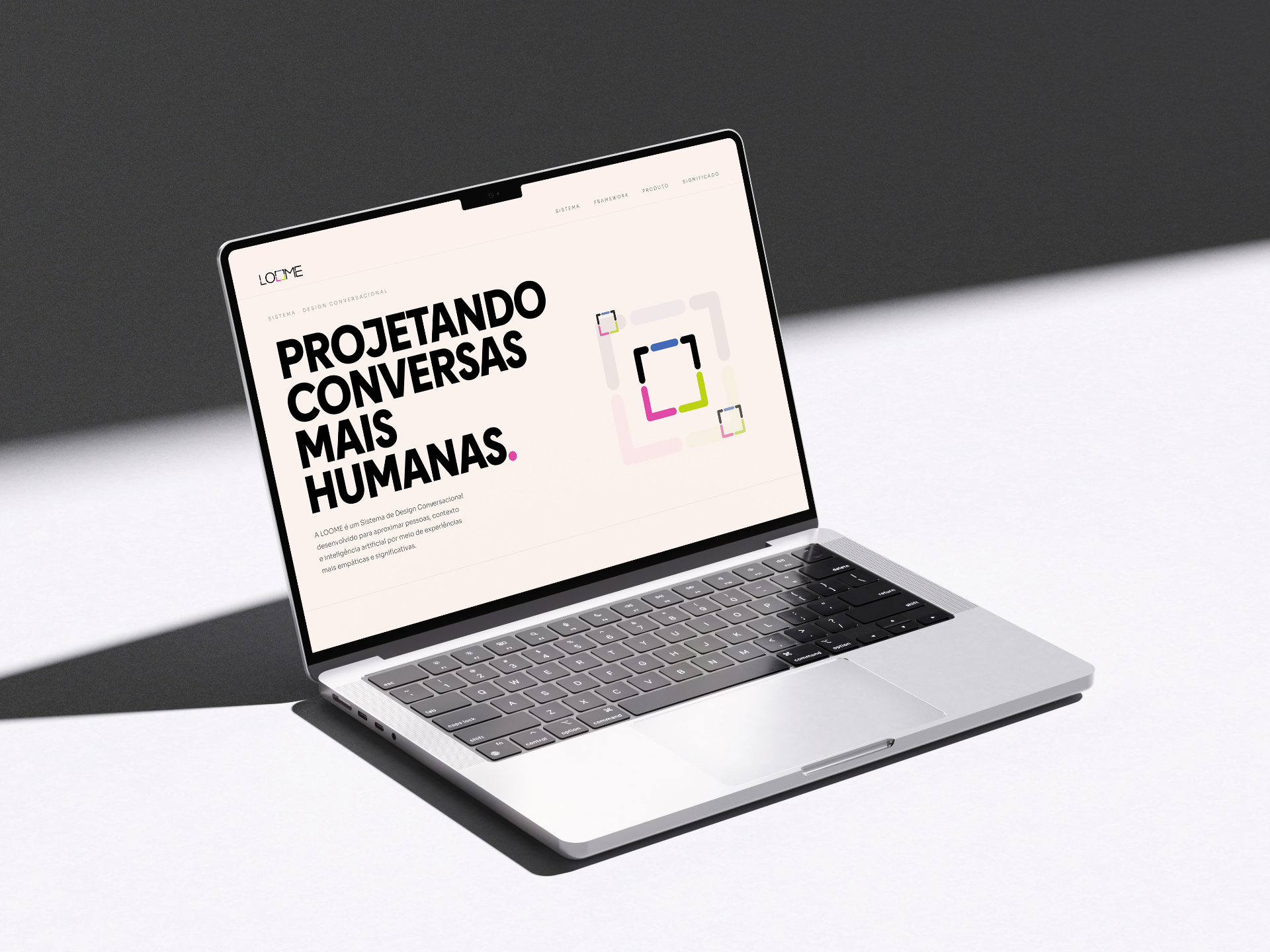
Beyond the printed framework and physical kit, LOOME features an interactive digital platform built to present the system and demonstrate its practical application. Navigation splits content into four layers: system, framework, product, and meaning.
06 · Experience
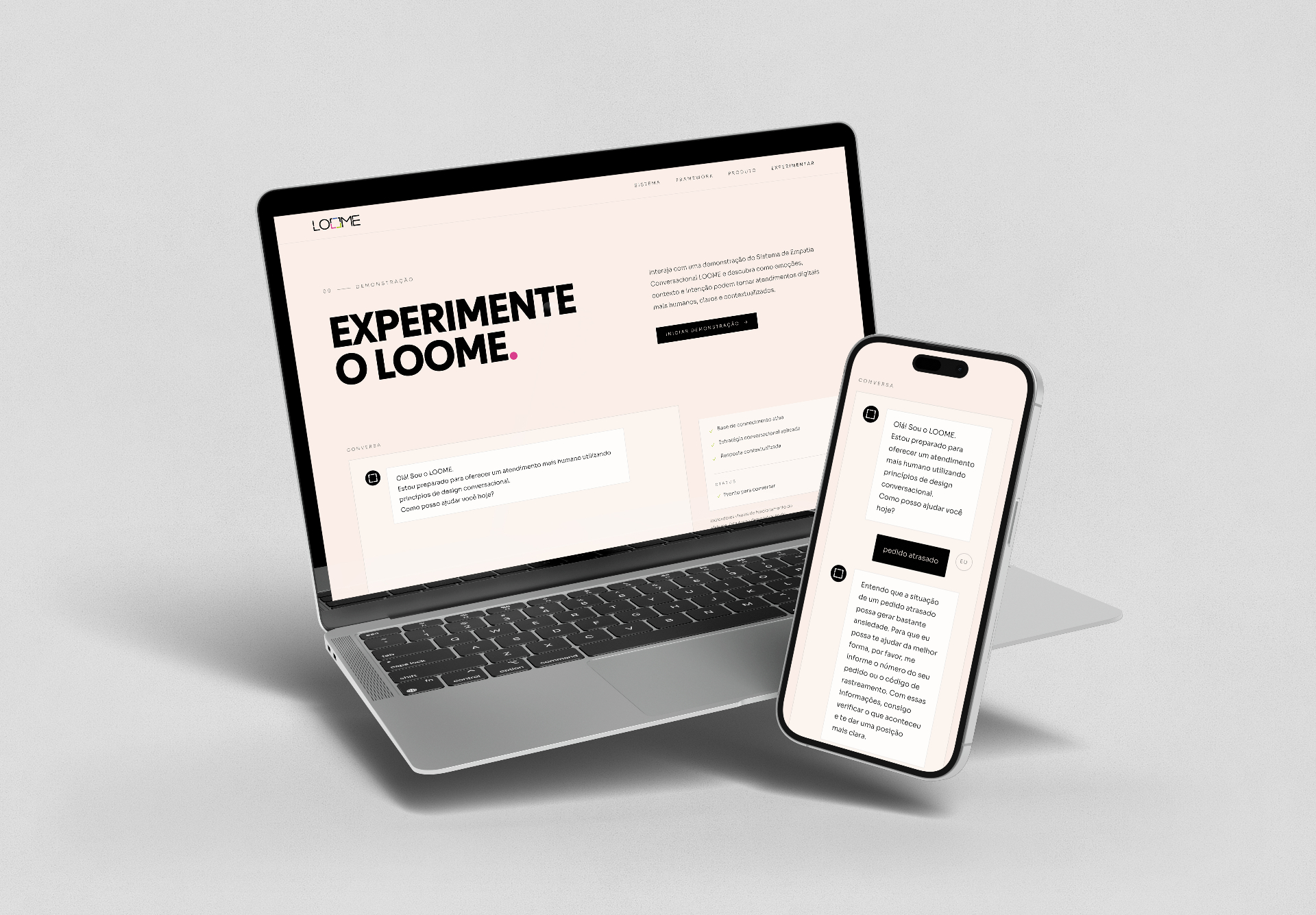
A conversation meant to be tried.
A navigable prototype was built so people could experience, firsthand, a conversation grounded in LOOME's principles. The goal was to translate the framework into something tangible: a dialogue that feels different from the very first message.
07 · Framework
Six principles for better conversations.
The framework organizes the design of conversational experiences around principles that guide decisions on tone, scope, and AI conduct. Each principle is a design criterion, not just a good intention.
01
Empathy
Recognize the user's emotional state before responding. The conversation starts with care, not a script.
02
Context
Understand the situation surrounding the interaction: channel, history, intent, and stage of the journey.
03
Clarity
Communicate objectively, without technical jargon, respecting the time and knowledge of whoever is listening.
04
Listening
Before suggesting solutions, understand what was said and what was left unspoken. AI needs to listen.
05
Personalization
Adapt language, tone, and level of detail to each person's profile and moment.
06
Guidance
Lead with transparency: show paths, explain limits, and hand control back to the user.
08 · Physical Kit
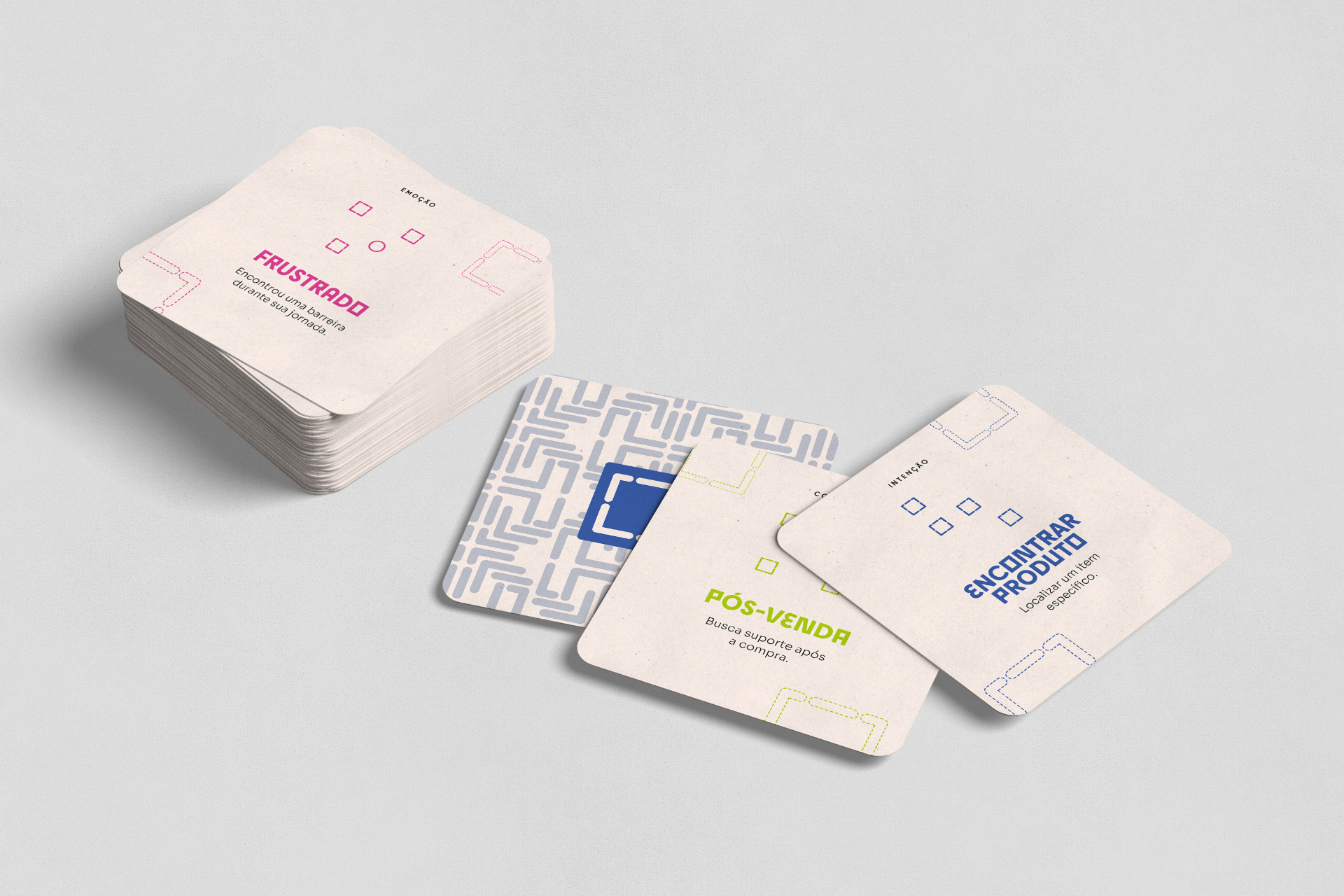
Conversational design happens before the screen.
The physical kit was designed for workshops and collaborative processes, helping teams map emotions, intentions, and contexts before writing a single line of conversation. The cards act as raw material for the framework: handled, combined, and discussed together.
It's the stage where customer service, product, design, and business come together to decide, as one, how the brand will converse.
09 · Process
Method before aesthetics.
Design Thinking · Double Diamond
The project followed the four phases of the Double Diamond, alternating divergence and convergence across discovery, definition, development, and delivery.
Service Design
Blueprints, user journeys, stakeholder mapping, and conversational flows structured the experience as a system, not an isolated interface.
User-Centered Design
Two personas guided decisions: Júlia, who values closeness and transparency, and Rafael, who expects efficiency and quick resolution.
Qualitative research and benchmarking
Interviews with professionals, a consumer survey, chatbot analysis, and literature review underpinned every principle in the framework.
10 · Outcomes
An integrated Conversational Design system.
The final deliverable brings research, brand, service, product, and platform together as parts of a single framework — a system that can be adopted, adapted, and expanded by teams designing conversations that truly matter.
- Branding
- Conversational Framework
- Brand Guidelines
- Physical workshop kit
- Functional prototype
- Digital platform
- Conversational system